
Marion County Projected Release Dates
Florida Department of Corrections uses the exact term Tentative Release Date. It is a forward-looking date for a person who remains in FDC custody. The date reflects the current sentence structure and gain-time record. It is not an appointment at a prison gate. A historical release date, by contrast, records an event that has already occurred. The two fields answer different questions.
A Marion County Jail detainee awaiting trial normally has no set release date. Bond may be posted, a judge may change the order, charges may be dismissed, or another warrant or detainer may keep the person in custody. A county-sentenced person can have a computation, but that comes from MCSO Classification and the court records, not the FDC tentative-date field unless the person also has an FDC sentence.
A transfer is not community release. Moving from Marion County Jail to FDC, from Florida Women's Reception Center to Lowell Correctional Institution, or between other state institutions keeps the person in custody. The destination field and current FDC location settle that distinction.
Pretrial cases require a different reading. A bond order states the terms under which release may become possible. It does not show that bond was posted or that all checks cleared. A dismissal or time-served sentence can supply legal authority, yet another case, warrant, federal hold, or immigration detainer may still control the next movement. Match the Marion Clerk order to the MCSO release sheet when the exact event matters.
Find Marion County Release Dates
Start with the system that owns the sentence. The FDC Inmate Release Information Search covers people released or scheduled for release from Florida prison. Search by the six-character DC number when available. A name search can return close matches, so compare the date of birth, physical details, photograph, offense, county, and sentence history.
- Determine whether the person is in Marion County Jail, an FDC prison, federal custody, or another system.
- For FDC custody, search by DC number or name and open the exact offender detail. Locate the Tentative Release Date and maximum sentence expiration fields.
- Read current prison sentence history, prior history, and community-supervision history together. Do not treat a move between institutions as release.
- For a Marion county-jail sentence, obtain the judgment and jail-credit terms from the Clerk, then ask MCSO for the current sentence computation.
- For a person held before trial, check bond and court orders, but expect no guaranteed date until all holds clear.
- Confirm a near-term date with FDC Admission and Release or MCSO Classification. Ask for the public computation record when precision matters.
The Marion County released-inmate search and record path is the right follow-up after the date passes. It distinguishes a logged community release from a transfer to another custodian.
A focused state-record request can fill gaps in the public result. Give FDC the name, DC number, date of birth, sentence or case, and the exact records sought. Useful items include the release certificate, movement history, sentence computation, gain-time ledger, supervision history, and public photograph. Admission and Release can address an FDC computation. It cannot certify a bond release that remained a county-only case.
A public FDC detail example shows how Tentative Release Date appears for a person still in state custody.
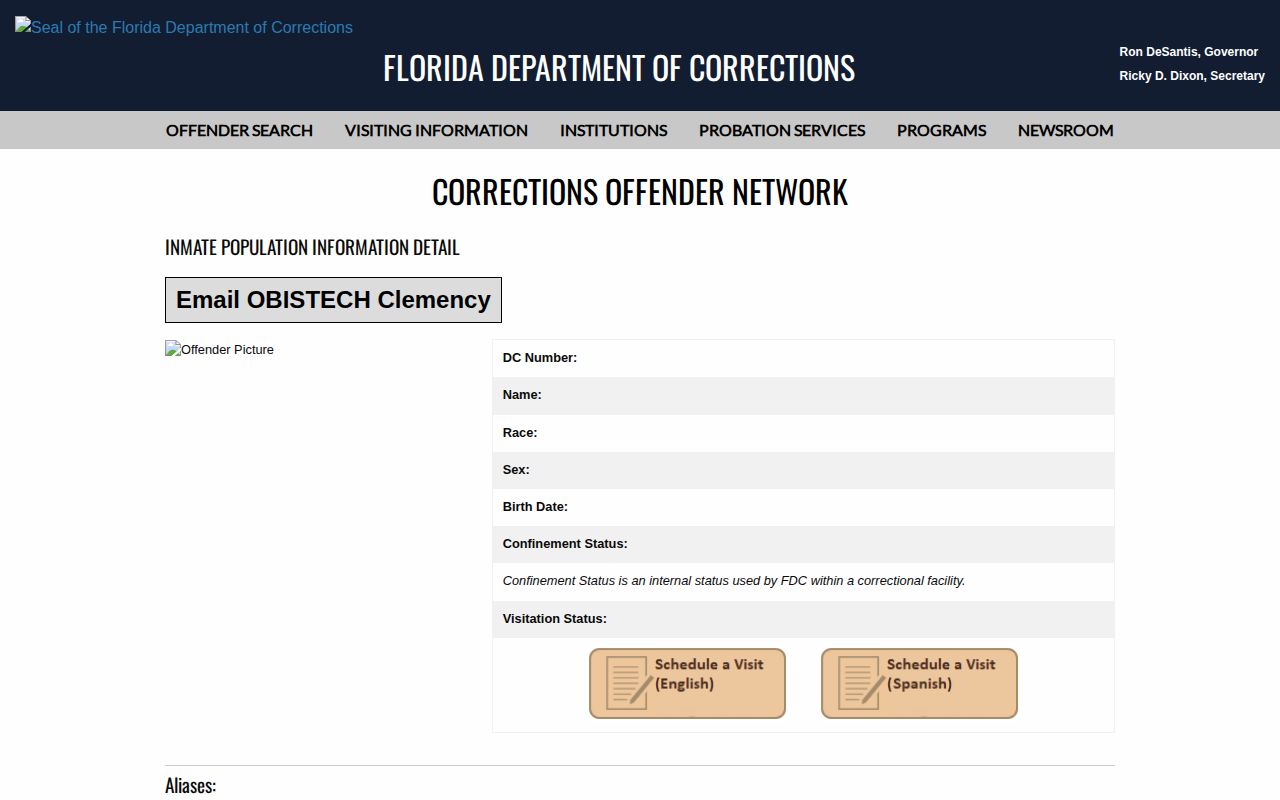
The field must be read with the current location, sentence record, and retrieval date because later credits or orders can change it.
Note: A future tentative date confirms a projection and continued FDC custody, not a completed release.
Florida Release-Date Calculation
Under Florida Statutes section 944.275, FDC establishes the maximum sentence expiration date after lawful jail and prison credits. It then determines a tentative release date based on gain-time that has been granted, restored, or forfeited. Maximum expiration and tentative release are not interchangeable. One describes when the sentence would expire after lawful credit; the other reflects the current gain-time projection.
For applicable offenses committed on or after October 1, 1995, gain-time cannot produce release before at least 85 percent of the imposed sentence has been served. Court-awarded credit for time physically held counts toward that floor. The statute allows up to ten days per month of incentive gain-time for the modern category, but “up to” is key. It does not support a flat ten-day subtraction from every month.
Older offenses follow different tiers. Basic gain-time is tied to a historical offense-date window, and older incentive rules may allow other monthly amounts based on date and offense class. Meritorious or educational awards have separate conditions. Some offenses are excluded. A sound Marion County release date lookup uses the actual offense dates, judgment, jail credit, and FDC ledger rather than a web calculator.
The official gain-time statute contains the definitions and limits behind FDC's tentative date.
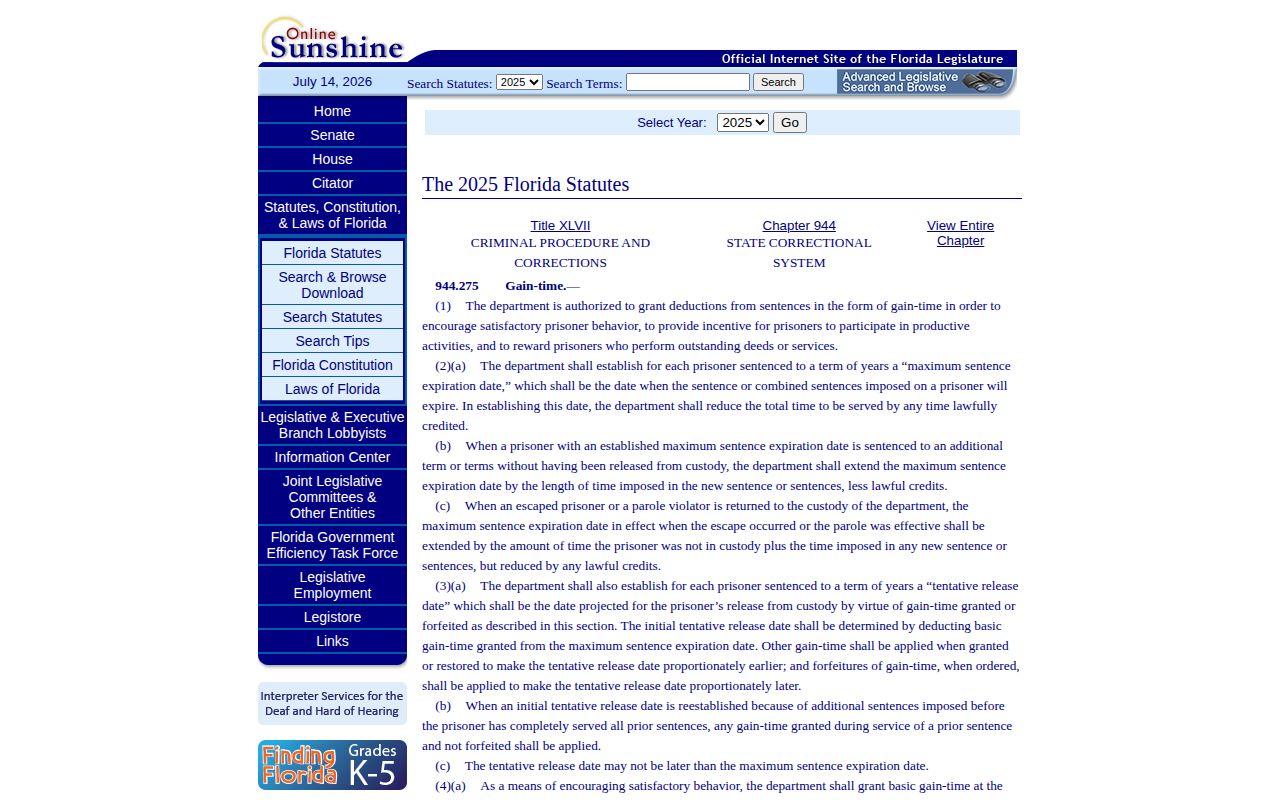
The statutory text explains why offense date, sentence type, forfeiture, and the 85-percent floor must be checked before interpreting the projection.
Marion County Jail Gain-Time
County jail time is governed by section 951.21, not the FDC gain-time statute. It authorizes county good-conduct deductions of up to five days per month in years one and two, up to ten in years three and four, and up to fifteen from year five. The local board may revise or discontinue the policy, and additional meritorious good time may be authorized on recommendation.
No current Marion County policy was found that makes those statutory maximums automatic. MCSO Classification calculates local release dates and work time, processes court dispositions, reviews release packets, and checks warrants after hours. Ask for the sentence computation and the work-time or good-time ledger. Do not apply FDC's 85-percent framework to a county sentence by default.
MCSO Classification and Booking identifies the local unit responsible for release-date and work-time calculations.

This local source is the right route for a Marion County Jail sentence, while FDC controls state-prison calculations.
What Changes Marion Release Dates
A projected date changes when the facts used in the computation change. Some changes move the date later. Others can move it earlier. The public field may lag the underlying order, so retain the retrieval date and confirm any near-term plan with the record custodian.
| Factor | Possible effect | Record to check |
|---|---|---|
| New or corrected jail credit | Changes time credited as served | Court order and computation ledger |
| Consecutive or concurrent sentences | Changes the combined sentence structure | Judgment and FDC sentence history |
| Gain-time grant or restoration | May move a tentative date earlier within legal limits | FDC gain-time ledger |
| Disciplinary forfeiture | May move the date later | FDC disciplinary and gain-time record |
| Minimum term or exclusion | Limits credits that may reduce confinement | Statute and judgment |
| Warrant or detainer | May lead to transfer instead of community release | Release packet and receiving-agency record |
| Court modification | Can alter sentence or credit | Marion Clerk docket |
| Parole or Commission action | Can set, alter, delay, or revoke a release plan | FCOR written action |
A parole agenda is not a release order. Likewise, bond payment is not the physical release timestamp. MCSO warns that release processing can take several hours while staff complete checks. A person may also leave one system for FDC, ICE, the U.S. Marshals Service, or another county.
Note: The court supplies legal authority, while the holding agency records when and where physical custody ended.
Marion Release-Date Rules Differ
Marion has separate state and county systems. Section 944.275 governs FDC gain-time and tentative release dates. Section 951.21 governs authorized county-prisoner good time. Mixing the formulas can produce a false date. MCSO's own Classification unit, not a generic calculator, determines the local sentence computation and work time.
No general Florida law was found that moves a Sunday or holiday sentence end date to the prior Friday. Do not assume an early weekend release. Section 951.04 separately addresses transportation or its monetary equivalent for certain discharged county prisoners, but it does not publish a Marion carrier, departure schedule, or exit point. Those are different issues.
For a county computation, ask MCSO for the ledger and current release packet. For a state computation, contact FDC Admission and Release at (850) 488-9167 or dc.release@fdc.myflorida.com. Include the DC number, date of birth, case, and the specific document needed.
Section 951.04 concerns transportation for certain county prisoners discharged after serving a sentence, pardon, or parole. It is not a release-date formula. The statute does not identify Marion's carrier, schedule, or gate. Transportation questions should be kept apart from the sentence ledger so that a practical ride issue is not mistaken for a legal change to the end date.
Confirm Marion County Actual Release
As the projected date approaches, check the source record again. FDC release information updates on its own cycle, and the agency warns that dates can change. For county custody, ask MCSO whether the computation remains current and whether another hold is recorded. The Marion Clerk docket can show a new order, but it may not show the exact gate time.
Florida VINE can send a participating-agency custody or release event. The Marion County VINE inmate check explains the one-person status and alert process. Treat “Out of Custody” as outside the named agency only. Confirm the destination through the release sheet, FDC record, or receiving authority before calling it community release.
For federal sentenced custody, the Bureau of Prisons locator can show a release date in the BOP record. A federal pretrial person temporarily held at Marion County Jail may instead remain in U.S. Marshals Service custody. ICE's locator concerns covered current immigration detention and is not a historical release certificate. Branch to those systems only when the county release destination or court record documents that path.
Identity matching remains essential at every stage. Use the booking number for an MCSO event, the DC number for an FDC sentence, and the case number for the Marion court docket. A name-only match can attach one person's tentative date to another person. Save the source agency, record number, status, and retrieval date. If the date changes, compare the later computation or order instead of assuming that the first result was a final promise.
A past FDC release date may coexist with an active community-supervision segment. That means prison custody ended while legal supervision continued. The projected-date record answers when confinement may end; the supervision history answers what follows. Read both before treating a prison release as the end of every part of the sentence.